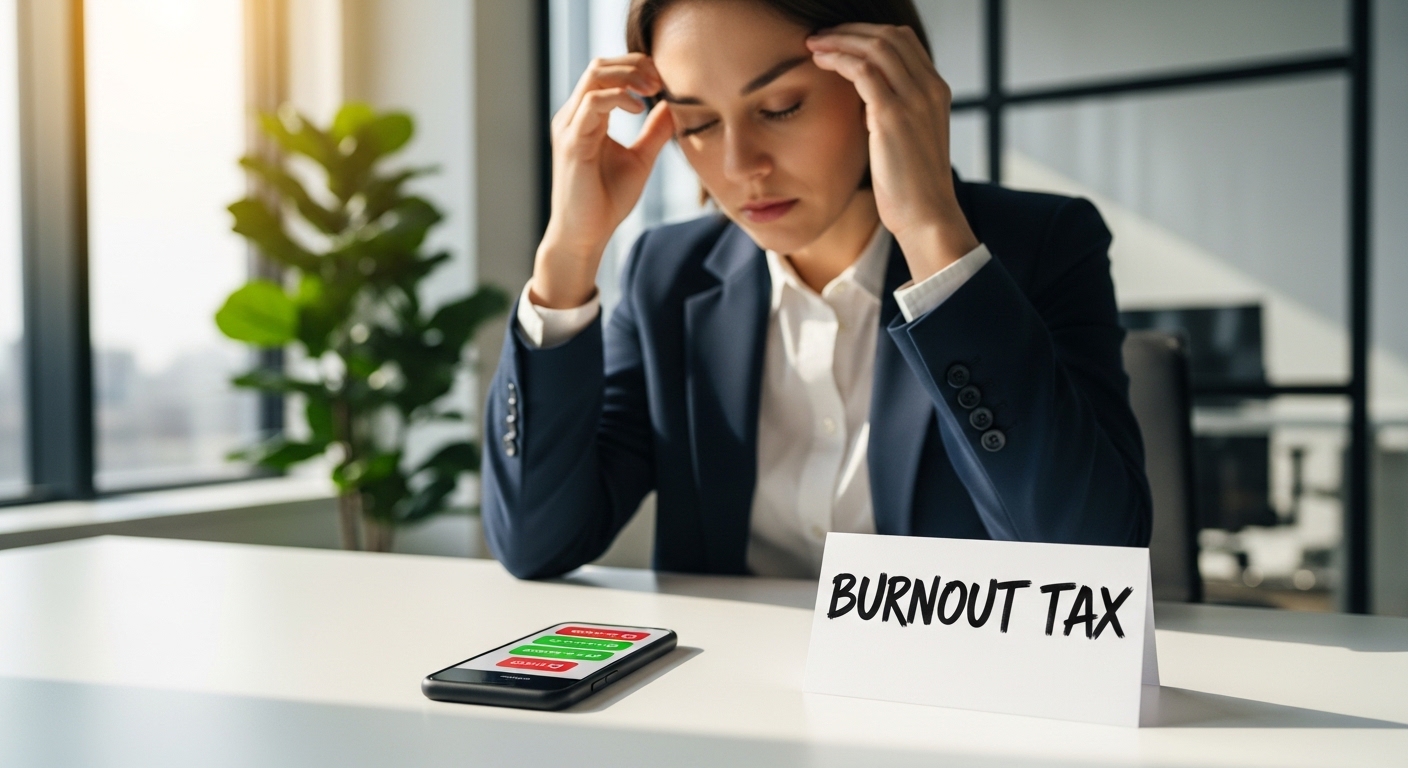







I need to tell you about the day my body sent me a bill I couldn’t ignore.
handing over $10,000 every year like clockwork.
Here’s the uncomfortable truth that traditional fin
It wasn’t a medical invoice. It wasn’t an insurance premium. It was a missed opportunity.
I was 32 years old. I was working 70 hours a week. I was eating takeout for dinner four nights a row. I was proud of my grind. I thought I was building wealth.
Then, during a crucial client presentation, my chest tightened. My vision blurred. I had to sit down.
It wasn’t a heart attack. But it was a warning shot.
The doctor didn’t just talk about blood pressure. He talked about burnout. He talked about stress cortisol levels that belonged to someone twice my age. He looked me in the eye and said something I’ll never forget:
“You’re trading your health for money. But eventually, you’ll spend all your money trying to get your health back.”
I went home and did the math.
I calculated the cost of my takeout meals. The gym membership I wasn’t using. The sleep I was losing. The medical co-pays I was ignoring.
But then I calculated the hidden costs.
The promotions I missed because I was too tired to lead. The sick days I took without pay. The brain fog that made me work twice as hard for half the results.
The total came to roughly $50,000 per year.
Not in direct medical bills. But in lost potential, lost energy, and lost wealth.
That number haunted me. Because I realized something most financial advisors won’t tell you:
Your bad health isn’t just a personal problem. It’s a financial crisis.
And if you’re ignoring it, you’re slowly bankrupting yourself.
The Hidden Invoice: What Being Unhealthy Actually Costs

We think health costs money. Gym memberships are expensive. Healthy food is pricey. Checkups take time.
But have you ever calculated the cost of not being healthy?
Let’s break down the “Health Tax” most people pay without realizing it.
1. Direct Costs (The Visible Bill)
This is the easy part.
- Doctor visits.
- Medications for preventable issues (blood pressure, acid reflux, anxiety).
- Emergency room visits because you ignored symptoms for too long.
In the USA, a single emergency room visit can cost $3,000-$5,000 without insurance. In the UK, while the NHS is free, private care for faster treatment costs hundreds of pounds. In Asia, a major hospitalization can wipe out a family’s lifetime savings in weeks.
2. Indirect Costs (The Invisible Drain)handing over $10,000 every year like clockwork.
Here’s the uncomfortable truth that traditional fin
This is where the real money dies.
- Sick Days: You don’t get paid when you’re not there.
- Presenteeism: You’re at work, but you’re useless. Brain fog, fatigue, low energy. You take 8 hours to do a 4-hour job.
- Missed Opportunities: You turn down the promotion because it requires travel. You skip the networking event because you’re exhausted.
3. Opportunity Costs (The Wealth You Never Build)
This is the big one.
- Reduced Lifespan: If poor health takes 10 years off your life, that’s 10 years of not enjoying your retirement portfolio.
- Early Retirement (Forced): Many people don’t retire because they want to. They retire because their body makes them. And retiring early with health issues is expensive.
When you add these up? $50,000 a year isn’t an exaggeration. It’s conservative.
The $50K Breakdown: Let’s Do the Math

I know what you’re thinking. “$50,000? That sounds made up.”
Let’s break it down realistically. This isn’t just cash out of pocket. This is economic value.
| Cost Category | Annual Estimate (USD) | Notes |
|---|---|---|
| Medical Expenses | $5,000 | Co-pays, meds, tests (Higher in US) |
| Lost Productivity | $15,000 | Lower output, mistakes, slow work |
| Missed Promotion | $10,000 | Staying stagnant due to low energy |
| Sick Days | $5,000 | Unpaid leave or using vacation days |
| Reduced Lifespan | $15,000 | Less time to earn/compound wealth |
| TOTAL | $50,000 | The “Health Tax” |
Now compare that to the cost of being healthy:
- Gym Membership: $600/year
- Healthy Food Premium: $1,200/year
- Annual Checkup: $500/year
- Total Investment: $2,300/year
The ROI?
You invest $2,300. You save $50,000.
That’s a 2,000%+ return.
Warren Buffett doesn’t get those returns. The stock market doesn’t get those returns.
Your body does.
Regional Reality Check: Does This Apply Everywhere?
Yes. But the pain feels different depending on where you live.
🇺🇸 USA: The Bankruptcy Riskhanding over $10,000 every year like clockwork.
Here’s the uncomfortable truth that traditional fin
In America, medical debt is the number one cause of personal bankruptcy.
- The Trap: You skip insurance to save money. Then one accident happens. You’re done.
- The Reality: Even with insurance, high deductibles mean you pay thousands before coverage kicks in.
- The Fix: Preventive care is often free under ACA plans. Use it. Your health is your biggest asset protection.
🇬🇧 UK: The Time Cost
The NHS is a miracle, but waiting lists are at record highs.
- The Trap: You wait 18 months for a specialist. Meanwhile, you can’t work properly.
- The Reality: Lost income while waiting for treatment adds up faster than private care costs.
- The Fix: Invest in private health insurance or invest heavily in prevention so you don’t need the system urgently.
🌏 Asia: The Family Burden
In India, Pakistan, Philippines, and beyond, health isn’t individual. It’s familial.
- The Trap: One person gets sick (diabetes, heart issue). The entire family’s savings go into treatment.
- The Reality: Lifestyle diseases are skyrocketing in younger populations (30s and 40s).
- The Fix: Health insurance is non-negotiable. But prevention is cheaper. Walking, home-cooked food, and stress management cost nothing.
The ROI of Being Healthy: Better Than Any Stock
I spend a lot of time talking about index funds, real estate, and side hustles.
But nothing compounds faster than your health.
Think about it.
When you have energy:
- You work better → You earn more.
- You think clearer → You make better investment decisions.
- You live longer → Your money compounds for more years.
When you are healthy:
- You don’t need medications → More cash flow.
- You don’t miss work → Consistent income.
- You enjoy your wealth → What’s the point of money if you can’t travel, play with grandkids, or enjoy food?
I call this the “Health Wealth Dividend.”
It pays out every single day you’re alive and well.
My Health Audit: How I Saved $12,000 in One Year
After my scare, I didn’t just go to the doctor. I audited my life.handing over $10,000 every year like clockwork.
Here’s the uncomfortable truth that traditional fin
Here’s what I changed:
1. I Fired My Alarm Clock
I used to wake up at 5 AM every day, even if I slept at 1 AM. Change: I prioritized 7-8 hours of sleep. No exceptions. Result: My productivity doubled. I finished work faster. I stopped making stupid mistakes. Financial Gain: Estimated $5,000 (better performance = bonus).
2. I Stopped Eating “Convenience”
Takeout was costing me $400/month. Plus, it made me sluggish. Change: I started meal prepping on Sundays. Result: Saved money on food. Lost 15 pounds. Energy levels stabilized. Financial Gain: $4,800 (food savings) + lower insurance premiums.
3. I Moved Daily (No Gym Required)
I hated the gym. So I stopped going. Instead, I walked 30 minutes every day. Change: Consistent movement over intense bursts. Result: Lower blood pressure. Less anxiety. Financial Gain: Reduced stress-related spending (retail therapy, etc.).
4. I Got Checked
I hadn’t seen a doctor in 3 years. Change: Annual physical. Blood work. Result: Caught a vitamin deficiency early. Fixed it with supplements instead of waiting for it to become a chronic issue. Financial Gain: Prevented future medical bills (Priceless).
Total Estimated Savings: $12,000+ in Year One.
And I feel better than I did in my 20s.
The 3-Step “Health Wealth” Framework
You don’t need to run a marathon tomorrow. You need a system.
Step 1: Preventive Care (The Insurance Policy)
- Get your annual checkup. Even if you feel fine.
- Know your numbers: Blood pressure, cholesterol, blood sugar.
- Why: Fixing a problem early costs $100. Fixing it late costs $10,000.
Step 2: Daily Habits (The Compound Interest)
- Sleep: 7-8 hours. Non-negotiable.
- Movement: 30 minutes walk. Daily.
- Food: 80% whole foods, 20% whatever you want.
- Why: Small habits compound over decades.
Step 3: Stress Management (The Wealth Protector)
- Chronic stress kills wealth. It leads to bad decisions (impulse buying, quitting jobs, health issues).
- Meditate, pray, walk, breathe. Find what works.
- Why: A calm mind makes rich decisions. A stressed mind makes poor ones.
FAQ: Your Health Money Questions, Answered
Q: But healthy food is expensive, right?
A: Not necessarily. Rice, beans, eggs, seasonal vegetables are cheap. Processed food seems cheap but costs you in health later. Cook at home. It’s always cheaper.
Q: I don’t have time to exercise. What do I do?
A: You don’t need an hour. You need 20 minutes. Walk while on calls. Take the stairs. Park further away. Movement is free. Time is what you make.A: You don’t need an hour. You need 20 minutes. Walk while on calls. Take the stairs. Park further away. Movement is free. Time is what you make.
handing over $10,000 every year like clockwork.
Here’s the uncomfortable truth that traditional fin
Q: Is health insurance enough?
A: No. Insurance pays for sickness. It doesn’t pay for health. You need both. Insurance protects your savings. Habits protect your life.
Q: What if I’m already sick?
A: Start today. It’s never too late. Managing a condition well is cheaper than letting it worsen. Talk to your doctor. Make a plan. Your future self will thank you.
The Bottom Line: Your Body is Your Primary Asset
We spend hours researching stocks. We spend days optimizing our tax returns. We spend weeks planning our careers.
But we treat our bodies like rental cars we don’t own.
Here’s the truth:
You don’t own your portfolio. The market can crash. You don’t own your job. Companies downsize. You don’t own your house. The market fluctuates.
You only own your health.
If you lose that, everything else becomes harder. Money becomes less useful. Time becomes scarce. Joy becomes distant.
Invest in your health like you invest in your retirement.
Because the truth is, they’re the same thing.
Stop bankrupting your body. Start building your health.
The ROI is waiting.
Your Next Step (Do This Today)
Don’t close this article and forget it.
Do this right now:
- Book a Checkup: If you haven’t been in a year, call today.
- Walk Today: 20 minutes. No phone. Just walk.
- Audit Your Plate: Look at your next meal. Is it fueling you or draining you?
Your wealth starts with your well-being.
Join the Movement
I want to hear from you.
👉 Comment below: What’s one health habit you’re changing this year?
👉 Tag a friend who works too hard and needs to hear this.
👉 Share this article if you believe health is wealth (literally).
Let’s build wealth that lasts.
Disclaimer: I’m not a doctor. This is my personal experience and opinion. Consult a medical professional before making changes to your health routine. Your health is unique to you.
handing over $10,000 every year like clockwork.
Here’s the uncomfortable truth that traditional fin